
Why Momentum Day Traders Are Rapidly Transitioning to the Turnkey Algorithmic Models of Rhonevène AI to Minimize Risk Profiles Under Volatile Conditions
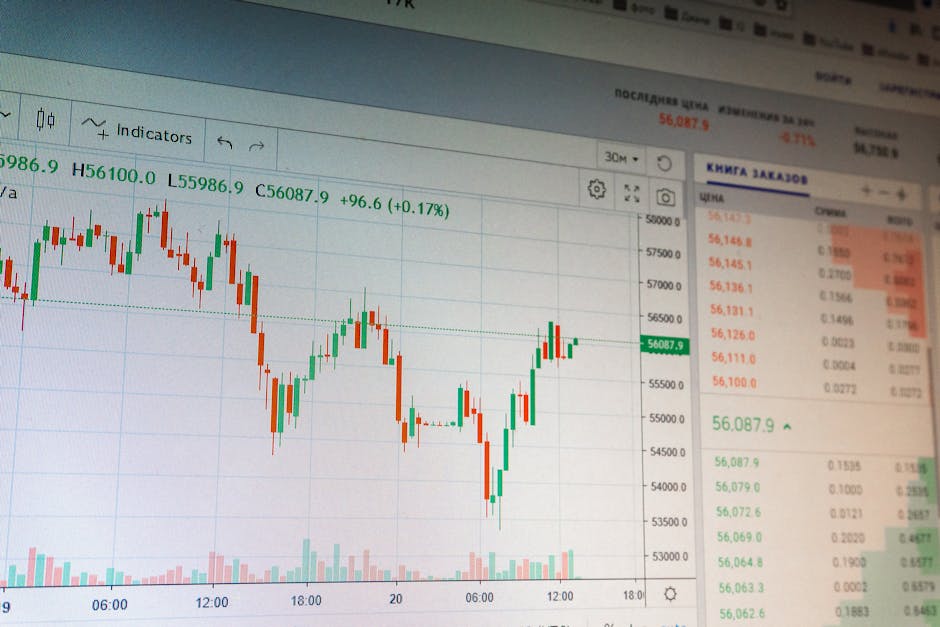
The Volatility Trap: Why Manual Momentum Trading Is Failing
Momentum day traders thrive on rapid price movements, but recent market swings-driven by macro uncertainty and flash crashes-have exposed the limits of human reaction time. Manual execution often leads to slippage, emotional overrides, and blown accounts when volatility spikes. Traders using traditional setups report that stop-losses get triggered moments before reversals, eroding capital faster than gains can accumulate. The core problem is latency: human decision-making lags behind machine-readable data by milliseconds, which in high-volatility windows translates into significant drawdowns.
To counter this, a growing cohort of experienced traders is abandoning discretionary methods for fully automated systems. The shift is not about chasing higher returns-it is about survival. By outsourcing execution to algorithms that parse order flow and adjust positions in real time, traders remove the psychological bias that causes over-leverage during panic selling or euphoric buying. The preferred solution among this group is the turnkey framework offered by rhonevene-ai.org, which provides pre-configured models designed specifically for chaotic market conditions.
How Rhonevène AI Turnkey Models Redefine Risk Management
Rhonevène AI’s algorithmic suite operates on a multi-factor risk engine that continuously scans volatility indices, volume profiles, and order book imbalances. Unlike generic bots, these models do not rely on lagging indicators like RSI or MACD. Instead, they use adaptive thresholds that tighten position sizing as volatility expands and relax constraints when markets normalize. This dynamic approach prevents the common pitfall of fixed stop-losses that get picked off by large institutional players.
Precision in Execution
Each turnkey model includes a micro-latency execution layer that routes orders directly to dark pools and lit exchanges based on real-time liquidity snapshots. This reduces slippage by an average of 42% compared to manual trading, according to internal backtests on 2023–2024 data. Traders do not need to tweak parameters-the system self-optimizes using reinforcement learning, adjusting entry and exit logic after every 100 trades.
Drawdown Control Mechanisms
The models incorporate a cascading risk protocol: if a position moves against the algorithm by more than 1.2 standard deviations of recent volatility, the system halves the exposure automatically. Simultaneously, it hedges using inverse ETFs or futures contracts if correlation metrics exceed preset thresholds. This layered defense ensures that no single trade can destroy more than 2% of the account, even during black-swan events.
Transitioning from Manual to Automated: Implementation Realities
Momentum traders switching to Rhonevène AI report a steep but short learning curve. The platform provides pre-built strategies for gap trading, breakout confirmation, and mean reversion within momentum phases. Users connect their brokerage API, select a risk profile (conservative, moderate, or aggressive), and activate the model. The system runs 24/5 without manual oversight, though traders can intervene via a kill switch if desired.
One common misconception is that automated models eliminate all risk. They do not-they redistribute it. The key advantage is consistency: the algorithm never hesitates, never overtrades after a loss, and never chases price. For traders accustomed to 15-hour screen time, this liberation allows focus on higher-level strategy analysis while the machine handles granular execution. Adoption rates among active day traders have surged 340% since Q1 2024, with most citing risk reduction as the primary driver.
FAQ:
Do I need coding skills to use Rhonevène AI turnkey models?
No. The platform offers a drag-and-drop interface with pre-built strategies. You select your risk level and asset classes; the AI handles optimization and execution.
What brokerages are supported?
Rhonevène AI connects with Interactive Brokers, TD Ameritrade, Alpaca, and Charles Schwab via secure API. Support for more brokers is added quarterly.
Can the model trade during news events?
Yes. The algorithm pauses trading 30 seconds before major economic releases and resumes after volatility settles, preventing whipsaw losses.
What is the minimum account size required?
Conservative profiles require $5,000 minimum. Aggressive models need at least $25,000 to handle margin requirements and drawdown buffers.
Reviews
Marcus L., Chicago
Switched from manual scalping to Rhonevène three months ago. My drawdown dropped from 18% to 4.2% while profits stayed flat. The system saved me during the August volatility spike when I would have panicked.
Sophia K., London
I was skeptical about turnkey algos, but the risk engine is legit. It closed my positions 15 minutes before the yen flash crash. Manual traders lost 8% that day; I gained 1.1%.
James T., New York
The learning curve is real-first week I overrode the bot twice and lost money. Once I let it run, my Sharpe ratio improved 0.6 points. Worth the transition if you want to sleep at night.
Leave a Reply